
Artikkeli
Scar treatment: 7 questions and answers
Seven common questions about using LymphaTouch in scar treatment, from how negative pressure works and what to check first to settings, assessment and offering scar treatment as a service.

Scar treatment is an essential part of post-surgical rehabilitation, whether the operation was a C-section, a knee replacement or a mastectomy. It typically combines manual techniques that improve scar flexibility with moisturisers and silicone products. This article looks at how the LymphaTouch device is used in scar treatment and answers seven common questions.
1. How does LymphaTouch work in scar treatment?
LymphaTouch creates negative pressure that lifts the tissue and stimulates lymphatic and blood circulation in the treated area. The device can be used with pulsating or continuous negative pressure. Pulsation gives the tissue time to recover, which makes the treatment gentle and suitable for sensitive and painful areas. The mechanical vibration feature helps soften tight tissue structures such as contracted and adhesive scars.
Video: the pulse lifts the different tissue structures and supports lymphatic flow
2. What should be considered before treatment?
Before treatment, check the device’s contraindications and assess whether the treatment suits the individual. LymphaTouch is suitable for treating surgical, burn and traumatic scars. After surgery, treatment can begin straight away to reduce swelling and relieve pain. In the acute phase, avoid traction on the wound or scar and keep the treatment head about five centimetres away from the scar.
Clean the treatment area before the session and make sure there are no open wounds or infections. Treatment directly on the scar can typically begin 6 to 8 weeks after surgery, based on a professional assessment. With keloid scars, focus on the surrounding tissue rather than the scar itself. Every scar is different, so the approach should always be decided case by case.
3. How should a scar be assessed?
Questionnaires such as SCAR-Q and POSAS evaluate the overall physical and psychological impact of the scar. A VAS scale can be used to measure the patient’s perception of pain. Scar tightness is assessed during active movement, such as shoulder or back extension, to see how it affects daily activities. The scar area is also evaluated manually, and findings are recorded so that progress can be tracked over time.
4. What are typical settings for scar treatment?
LymphaTouch treatment is tailored to the individual. The settings depend on the cup size, the patient’s sensitivity, the treatment area and the age of the scar. Always use a medium so that the cup glides smoothly over the skin.
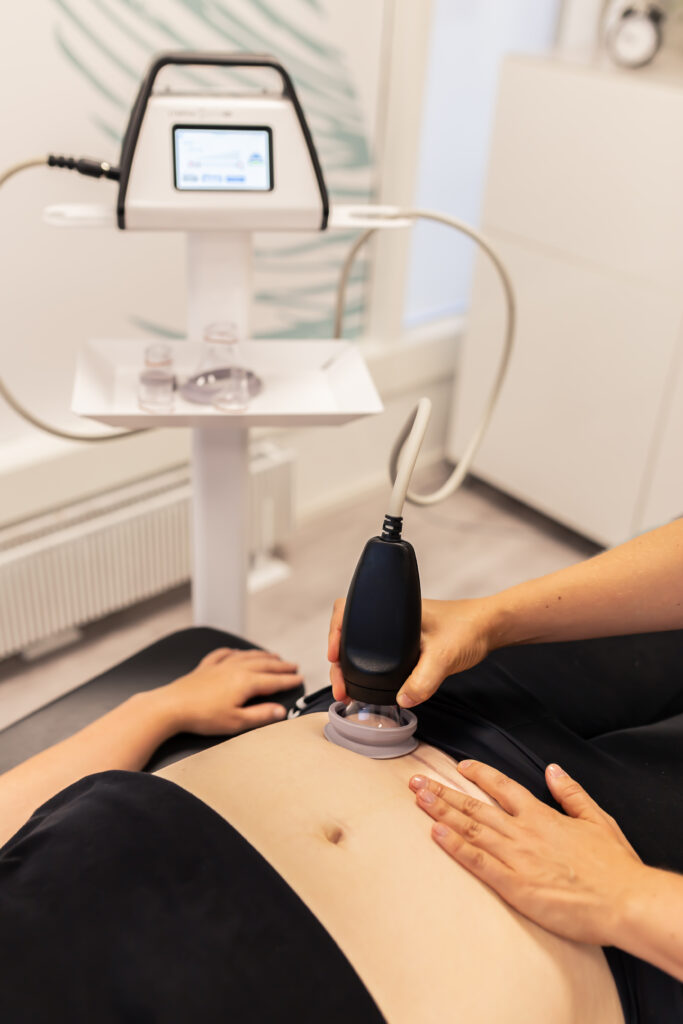
60 mm cup
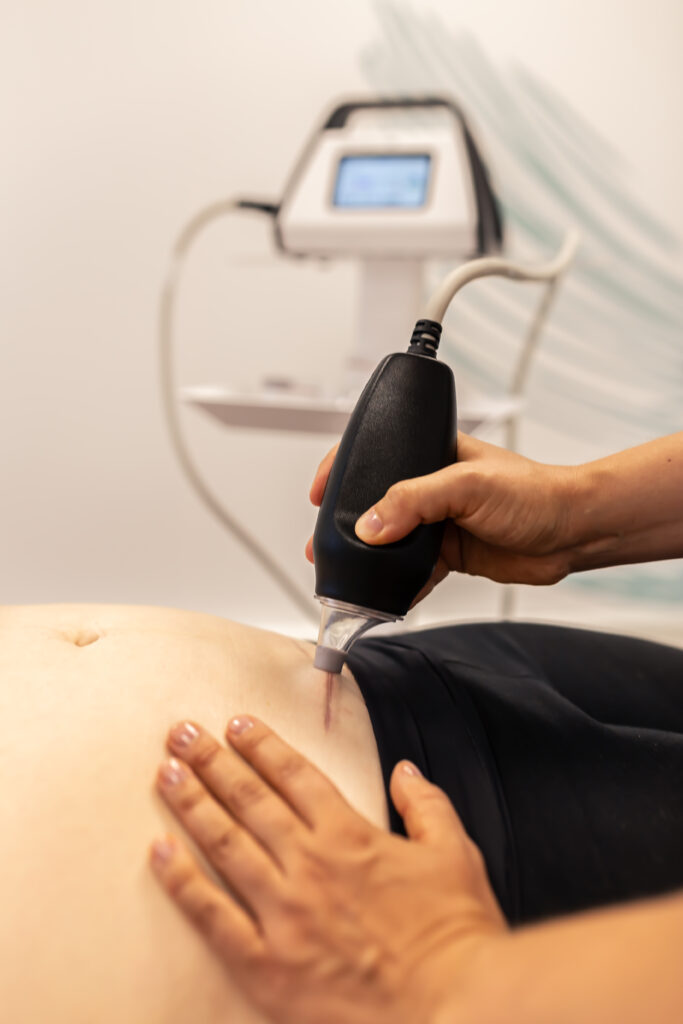
10 mm cup
- Large cups (50, 60 or 80 mm): often used with a pulsed setting to create consistent negative pressure in the tissue. Start with low negative pressure (60 to 100 mmHg) on healthy tissue.
- Small cups (10 or 35 mm): used for localised scar mobilisation with pulsed or continuous negative pressure. Tight scars can be treated with negative pressure of 150 to 400 mmHg.
- Swelling treatment: negative pressure between 60 and 180 mmHg, with treatment directed towards the lymph nodes and main lymphatic pathways.
5. What results can be expected?
Many patients report softening of the scar, pain relief and improved mobility after just a few sessions. Results vary between individuals, but regular treatment can significantly improve the appearance and function of the scar and help with sensory deficits.
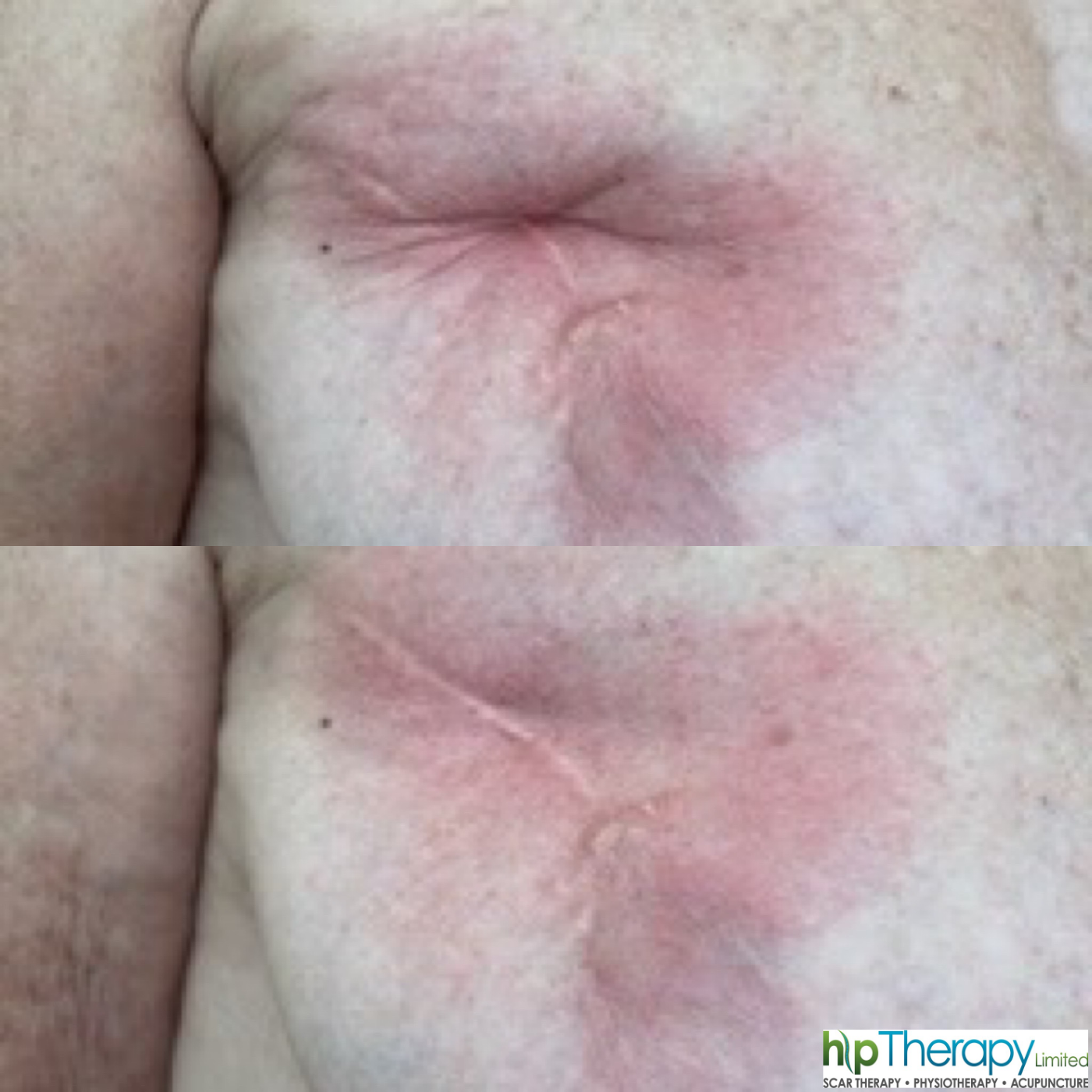
Treatment example: a 27-year-old lumpectomy scar. The client had a surgical scar that was severely stuck down after breast cancer treatment. Because the scar was so adhered, LymphaTouch was judged particularly useful in her treatment plan. Each session included two 15-minute periods of LymphaTouch treatment, and the client was given home exercises. After four sessions, the scar was on a par with the surrounding skin.
6. How can scar treatment be offered as a service?
LymphaTouch scar treatment fits easily into physiotherapy or aesthetic treatment services. The first session typically lasts 60 minutes and includes assessment, treatment and home care instructions. Follow-up appointments can be booked as 30-minute sessions, which makes good use of both the therapist’s and the patient’s time.
Include a clear description in your booking system of who the treatment is for and what it offers. Short follow-up sessions keep visits cost-effective as part of rehabilitation, whether after a C-section or joint replacement surgery or in cancer rehabilitation.
7. Where can I learn more about scar treatment?
Follow @lymphatouch on social media, where we regularly share new ways of using the device, new clinical evidence and news of upcoming webinars.
You will also find several webinars on scar treatment in our resources.
Watch the webinar recording
Fill in your details to get instant access to the recording.