
Artikkeli
Susan's story: the impact of lymphedema
After breast cancer surgery, Susan developed lymphedema and repeated bouts of cellulitis. Her story covers life with the condition and her treatment with LymphaTouch at Johns Hopkins.
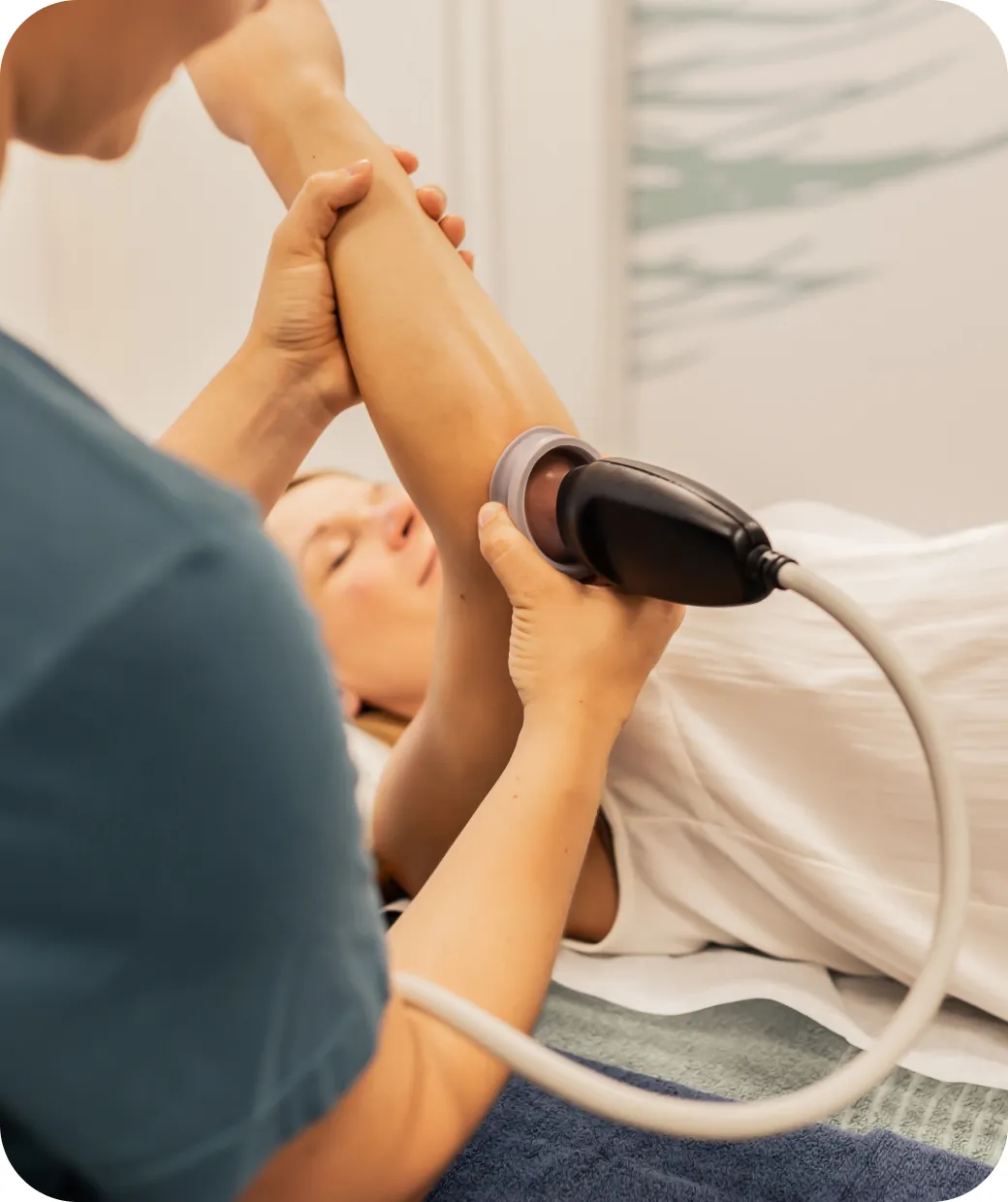
Seven years ago, a fall on a patch of ice changed Susan's life for good. Before that, she had an active lifestyle just outside Toronto, a career in the fashion industry and a thriving young family. “I considered myself fit and healthy,” she said. “I took pride in that.” Everything changed after the fall. It didn't injure her badly, but the X-rays taken at the hospital revealed a far more serious problem: breast cancer.
A year of harsh chemotherapy and radiation therapy ended with a complete mastectomy of her right breast. The treatment worked, and Susan was cancer free. Soon after, however, came another diagnosis: lymphedema.
When they removed Susan's breast, her surgeons also had to remove some of the lymph nodes under her right arm. These nodes help filter and circulate lymph fluid around the body, which is critical for clearing away debris and fighting off infections. Without them, lymph began to build up in Susan's arm. The arm swelled and became extremely vulnerable to infection. “It was like a handicap,” Susan said. “I hated it. My arm ballooned, the skin looked off, and I couldn't lift more than five pounds with it.”
Her condition also carried serious risks. Three or four times a year, her arm became inflamed with cellulitis, a potentially life-threatening skin infection that requires immediate hospitalisation and a strong course of antibiotics. The repeated episodes made Susan miserable. Her frequent hospital stays also began to affect her career: she had to miss important business trips to New York City and couldn't reliably keep appointments.
Her friends didn't understand the underlying causes of her illness. “They couldn't understand that these flare-ups were mostly out of my control,” Susan said. Even her husband and son, whose support she could always count on, had started to see her differently. Susan noticed a new note in their relationship: pity. Instead of the lively, vivacious professional she used to be, she now seemed a frail, sickly woman. This was devastating for her.
“I hated being seen that way, as ‘the sick person’. That's not who I am. Certainly not who I want to be.”
Susan
After years of battling the condition and making exhausting hospital trips every quarter, things came to a head two years ago. A new bout of cellulitis struck her arm, far worse than the previous ones. Clinical staff could not reduce the swelling, and the bacteria in her skin resisted antibiotic treatment. Her doctors never had reassuring news to give her. Throughout her 13-night stay, Susan was warned that she stood a real chance of losing her arm, or even dying.
Fortunately, Susan was discharged with her arm intact. But the experience shook her basic sense of wellbeing. She now felt afraid and hopeless, and she lost any sense of safety. The next bout of cellulitis could be only months away, and there was no guarantee she would survive it.
To Johns Hopkins for LymphaTouch therapy
This frightening realisation pushed Susan to take drastic action. She flew to Baltimore to see an oncology rehabilitation specialist at Johns Hopkins. The specialist, Kathy McGinty, introduced Susan to LymphaTouch.
“When I first met Susan I could tell she was feeling pretty despondent. She was at stage II or early stage III lymphedema. Parts of her arm had a thick, doughy feeling consistent with fibrosis. That was the first symptom I knew the LymphaTouch could help with.”
Kathy McGinty
Protein-rich lymph fluid had collected in Susan's arm and started to make the tissue fibrotic. When Susan first saw the LymphaTouch, she was sceptical. “I didn't want to try it at first,” Susan said. “I had tried other therapies and nothing was working. I didn't think this new machine could help.” Kathy sees the same reaction in most of the patients who come to her.
“Manual massage can be therapeutic, and they're gentle, so patients can get attached to how they feel. But the LymphaTouch does things that hands just can't. I coaxed Susan into giving it a try.”
Kathy McGinty
In the first session, Kathy used the negative pressure of the LymphaTouch to lift the fibrotic tissue in Susan's arm. This created space for the blocked lymph to circulate. Gentle mechanical vibration then worked on the fibrotic tissue, softening it almost immediately.
“I noticed a change in how my arm felt right away. Honestly, I was shocked.”
Susan
Already in the first session, the treatment began to give the tissue in Susan's arm some pliability and suppleness. As the sessions continued, Susan saw other important improvements. The discolouration of her arm faded, and the arm regained mobility and function. Before long, Kathy noticed an even bigger change: Susan was happier every time she came in, and her emotional strength was returning. Susan also felt that the first sessions had a big impact on her mood, and she began to feel hopeful and safe again.
More therapeutic possibilities
Kathy reports that Susan's results are typical of her patients. Lymphedema patients used to need five or six weeks of treatment before they were ready for discharge. With the LymphaTouch, that time is down to three weeks.
She has also been continually pleased by the range of uses for the device. According to Kathy, it has helped her patients, for example:
- come off feeding tubes after treatment of myofascial restrictions in the facial muscles
- have Foley catheters removed after treatment of genital lymphedema
- with irradiated tissue after cancer treatment
- regain proprioception in peripheral neuropathy
- with Lyme disease
The device has also helped Kathy herself: because she does less manual massage, her hands feel much better at the end of the day. She can't imagine working without the LymphaTouch.
A new life after treatment
For Susan, though, the most important effect of the LymphaTouch took a while to become clear. It has been almost a year and a half since those first sessions, and in that time her arm has had only one mild bout of cellulitis, compared with three or four serious infections a year before.
“I'm not that sickly person anymore. I'm at this new plateau of health. And it takes work to maintain it. But the LymphaTouch is what brought me here, and it's what's keeping me here.”
Susan
Watch the webinar recording
Fill in your details to get instant access to the recording.