
Artikkeli
LymphaTouch has its place in pain management
Pain management needs more drug-free, non-invasive treatment options. Two studies have looked at LymphaTouch in carpal tunnel syndrome and shin splints.
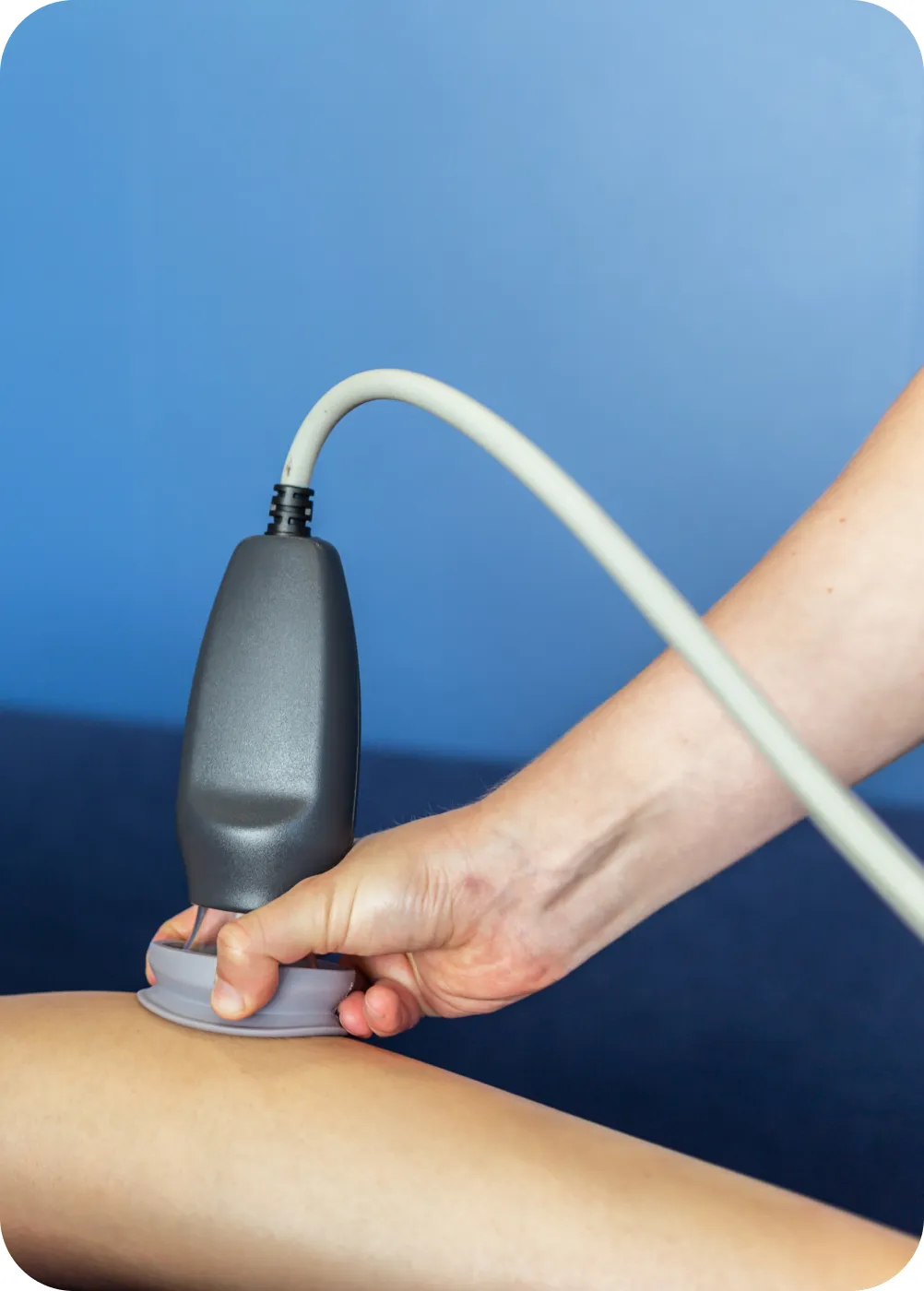
LymphaTouch offers an effective, research-based method for rehabilitation. Pain management needs more drug-free and non-invasive treatment methods, and LymphaTouch is a great option.
Negative pressure therapy is a safe and comfortable form of rehabilitation. Its adjustable functions allow treatment to be tailored to each individual and delivered efficiently and without pain. Compared with other negative pressure treatments, LymphaTouch is gentler. The measurable results make it easy to plan the next steps of treatment and to monitor how the injured area is recovering.
When the LymphaTouch treatment head is in close contact with the skin, it creates negative pressure that stretches the skin and underlying tissue. As the tissue stretches, the lymphatic vessels open and lymph flows from the interstitial space into them. Stretching the walls of the lymphatic vessels stimulates the body's natural lymphatic pumping, which enhances lymph circulation and drainage.
Musculoskeletal symptoms and LymphaTouch
With negative pressure, mechanical vibration and five different cup sizes, LymphaTouch is suitable for many purposes. Carpal tunnel syndrome and shin splints are two typical chronic musculoskeletal conditions.
Carpal tunnel syndrome
Carpal tunnel syndrome affects about 1-2 in 100 men and about 2-5 in 100 women. The nerve compression behind it can develop quickly as a result of swelling after an injury, or gradually due to strain on the wrist from work or hobbies. Typical symptoms mainly include numbness in the thumb and the other fingers.
A study investigated the effect of LymphaTouch on carpal tunnel syndrome. The participants had typical symptoms: numbness, tingling, pain in the wrist radiating to the arm, weakness and so on. Symptoms occurred at night, in the morning and sometimes during the day with exertion. After a course of LymphaTouch treatment, participants' symptoms decreased by up to 50%. Three weeks after the treatment period, 28% of participants still reported milder symptoms than at the start of the study.
Shin splints
Shin splints, or lower leg compartment syndrome, develop when a muscle group in the lower leg swells due to strain or injury. The fascia surrounding the muscles does not give, so the compartment becomes too tight and blood circulation is restricted. A typical symptom is pain in the muscle group, especially when extending the ankle, which gets worse with exertion. Shin splints can be caused by an injury or develop gradually.
The effect of LymphaTouch on shin splints was investigated in a study in which 95% of participants exercised regularly, including running. 35% said their training also included jumps and bounds, which cause repeated impact and predispose the lower leg to shin splints.
The study measured how far participants could walk and run without pain, before and after LymphaTouch treatment. At the start, the pain-free walking distance was 1-5 km. By the end of treatment, it had increased to 5-10 km. The number of participants able to walk more than 10 km was the same at the start and at the end. Pain-free walking distance increased for as many as 40% of participants.
At the start, 10 participants could run 1-5 km without pain and only one could run 5-10 km. At the end, 6 participants ran 1-5 km and 5 ran 5-10 km without pain. Pain-free running distance increased for 25% of participants. On a scale of 0 to 10, the average extent to which shin splints hampered participants' exercise was 6.05 at baseline and 4.05 at the final measurement.
Summary
Both studies found that regular LymphaTouch treatment relieved symptoms. The lift that negative pressure creates in the tissue supports the rehabilitation of both acute injuries and overuse injuries.
LymphaTouch made it possible to continue playing the flute
“LymphaTouch has been an integral part of the rehabilitation of severe wrist fracture surgery and several months of highly painful neuropathy. My entire upper limb, from the shoulder to the fingers, was locked. I play the flute professionally, and the doctor said I would never be able to play my flute again.
Eventually, my physiotherapist started LymphaTouch treatments as part of my rehabilitation. It took time: twice a week at first, then once a week, and finally every 2-3 weeks. Thanks to the LymphaTouch treatments, the wonderful professionalism of my therapist and the exercises I do at home, my mobility has improved by 95%. I will continue until I have recovered 100%. All my nerve pain is gone, and I can play my flute again. Deepest thanks to the developer of this amazing device. It has helped me get my life back.”
Marina Raye, Black Mountain, NC
References
Säären lihasaitio-oireyhtymä, ”penikkatauti” [Lower leg compartment syndrome, “shin splints”]. 2022. Terveyskirjasto. https://www.terveyskirjasto.fi/dlk00317
Rannekanavaoireyhtymä (karpaalitunnelisyndrooma) [Carpal tunnel syndrome]. 2022. Terveyskirjasto. https://www.terveyskirjasto.fi/dlk00770
Röntynen, J. & Tuomainen, M. LymphaTouch-hoitomenetelmän vaikuttavuus rannekanavaoireyhtymän hoidossa [Effectiveness of the LymphaTouch treatment method in carpal tunnel syndrome]. Savonia University of Applied Sciences.
Moilanen, T. & Päivänen, J. 2012. Vaikuttaako LymphaTouch-hoitomenetelmä penikkatautiin? Määrällinen tutkimus asiakkaiden kokemuksista [Does the LymphaTouch treatment method affect shin splints? A quantitative study of client experiences]. Oulu University of Applied Sciences.
Watch the webinar recording
Fill in your details to get instant access to the recording.