
Artikkeli
LymphaTouch and CRPS
An overview of complex regional pain syndrome (CRPS) and swelling treatment in its rehabilitation, with physiotherapist Viivi's experience of using LymphaTouch.
Complex regional pain syndrome (CRPS) is a peripheral pain disorder of the limb that most commonly develops after an injury or surgery. It is a severe pain condition with sensory, motor, autonomic and trophic symptoms and signs. Diagnosis is based on clinical examination findings, the patient's history and symptoms, and the exclusion of other possible causes. CRPS has two subtypes: CRPS I occurs without nerve damage, and CRPS II occurs after a known nerve injury. The symptoms vary and may change over time with treatment and rehabilitation (1).
Typical symptoms of CRPS include:
- continuous pain
- increased sensitivity to painful stimuli
- pain caused by stimuli that are normally painless (e.g. touch)
- temperature differences between limbs and/or changes or asymmetry in skin colour
- swelling and/or changes or asymmetry in sweating
- limited range of motion and/or motor dysfunction (3)
The aims of CRPS rehabilitation are to relieve pain, improve functional capacity and quality of life, and prevent the long-term effects of the condition. These goals can be achieved by identifying the syndrome quickly and starting treatment and rehabilitation without delay (1). The most common physiotherapy method is therapeutic exercise, with functional exercises that improve range of motion. Other physiotherapy methods, such as brain and sensory training, cognitive behavioural therapy, mindfulness exercises and multidisciplinary pain management programmes, are also in active use (2).
Swelling treatment in CRPS rehabilitation
Chronic pain changes how the cerebral cortex and motor cortex function. Continuous pain impulses cause hyperactivation of the motor cortex, which reduces normal limb function: joint mobility becomes limited, the active muscle pump works less and swelling increases. Lymphatic therapy aims to increase lymphatic drainage, which reduces tissue pressure and the irritation of pain receptors caused by swelling. As the pressure evens out, the sensations in the whole CRPS limb change. The touch involved in lymphatic therapy also works as desensitisation: it activates the motor areas of the brain linked to the CRPS limb and provides sensory stimulation. This is based on the plasticity of the brain, which is why it is important that lymphatic therapy is painless (5).
Swelling treatments have been used as part of CRPS rehabilitation, and the methods used have reduced swelling and pain and increased active mobility of the limb (4).
With CRPS patients, lymphatic drainage starts on the trunk to see how the body reacts to increased lymph circulation. After that, treatment can move on to the sensitised limb. If the CRPS limb is highly sensitised, lymphatic drainage can make use of mirror neurons, meaning the treatment is performed on the healthy side (5).
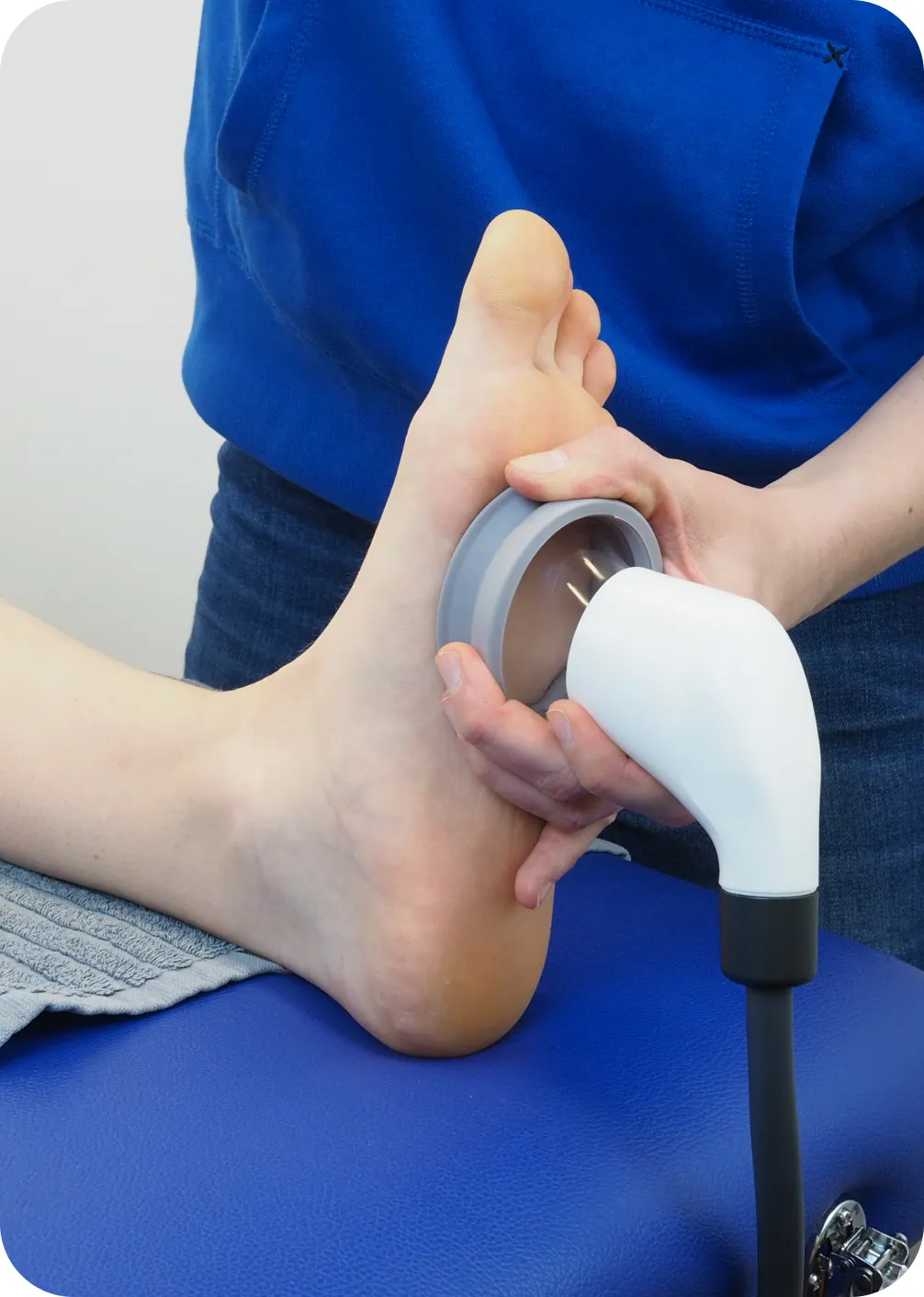
LymphaTouch has also found its place in CRPS rehabilitation. The negative pressure and tissue lift created by LymphaTouch activate lymph circulation even at low pressure levels. It is advisable to start LymphaTouch treatment at a low negative pressure and increase it if needed according to how the patient feels.
Physiotherapist Viivi from Pihlajalinna on using LymphaTouch with CRPS patients
I have used LymphaTouch as part of treating CRPS patients for 10 years now. I use LymphaTouch for swelling treatment with my CRPS patients because I am not a trained lymph therapist. If a patient is very sensitive and in a lot of pain, I refer them to a colleague trained in manual lymphatic drainage to get lymphatic treatment started.
If manual lymphatic drainage gets a good response and the patient tolerates it, I start lymphatic treatment with the device. The key is always to stay within a range and intensity that is painless or tolerable for the patient. With CRPS patients, treatment always starts from a pain-free area: the upper thoracic aperture (clavicular fossae and armpit), the shoulder and the abdomen, and possibly the healthy limb. If treatment in these areas is tolerated, I move towards the painful limb.
Some patients with upper limb CRPS tolerate manual lymphatic drainage on the painful arm all the way down to the palm, but with LymphaTouch the treatment may need to stay in the upper arm or upper forearm without progressing further down the limb. Depending on the patient's tolerance, treatment can be extended to the hand and palm. Similarly, patients with lower limb CRPS often tolerate treatment down to the middle of the lower leg. The ankle area cannot always be treated because of pain, but many patients tolerate treatment of the sole of the foot well.
Pain in CRPS varies a lot from day to day, so treatment always follows the situation on the day and stays in an area that is painless or tolerable for the patient. On painful days, many patients have found treatment of the upper thoracic aperture, abdomen and shoulder area relaxing. It already stimulates the body's lymph circulation and has positive effects in the painful limb too. Patients with upper limb CRPS often benefit from releasing the muscles of the shoulder girdle. In this area, patients can tolerate relatively high pressure levels with LymphaTouch, and they often find the treatment pleasant.
Sources
- Duodecim. 2017. Alueellinen kipuoireyhtymä [Complex regional pain syndrome]. https://www.duodecimlehti.fi/duo13888
- Miller, C., Williams, M., Heine, P., Williamson, E. & O'Connell, N. 2019. Current practice in the rehabilitation of complex regional pain syndrome: a survey of practitioners. Disability and Rehabilitation, 41. https://doi.org/10.1080/09638288.2017.1407968
- International Association for the Study of Pain. Classification of chronic pain. 2nd edition (revised). www.iasp-pain.org/files/Content/ContentFolders/Publications2/ClassificationofChronicPain/Part_II-A.pdf
- Safaz, I., Tok, F., Taskyanatan, M. & Ozgul, A. 2009. Manual lymphatic drainage in management of edema in a case with CRPS: why the(y) wait? Rheumatol Int (2011) 31:387–390. DOI 10.1007/s00296-009-1187-x.
- Lyko magazine. 2011. Manuaalinen lymfaterapia lievittää kipua CRPS:ssä [Manual lymphatic drainage relieves pain in CRPS]. Anne Anttila and Heli Turkki (physiotherapists, lymph therapists).
Watch the webinar recording
Fill in your details to get instant access to the recording.