
Tutkimus
Interstitial fluid movement in soft tissue under negative pressure
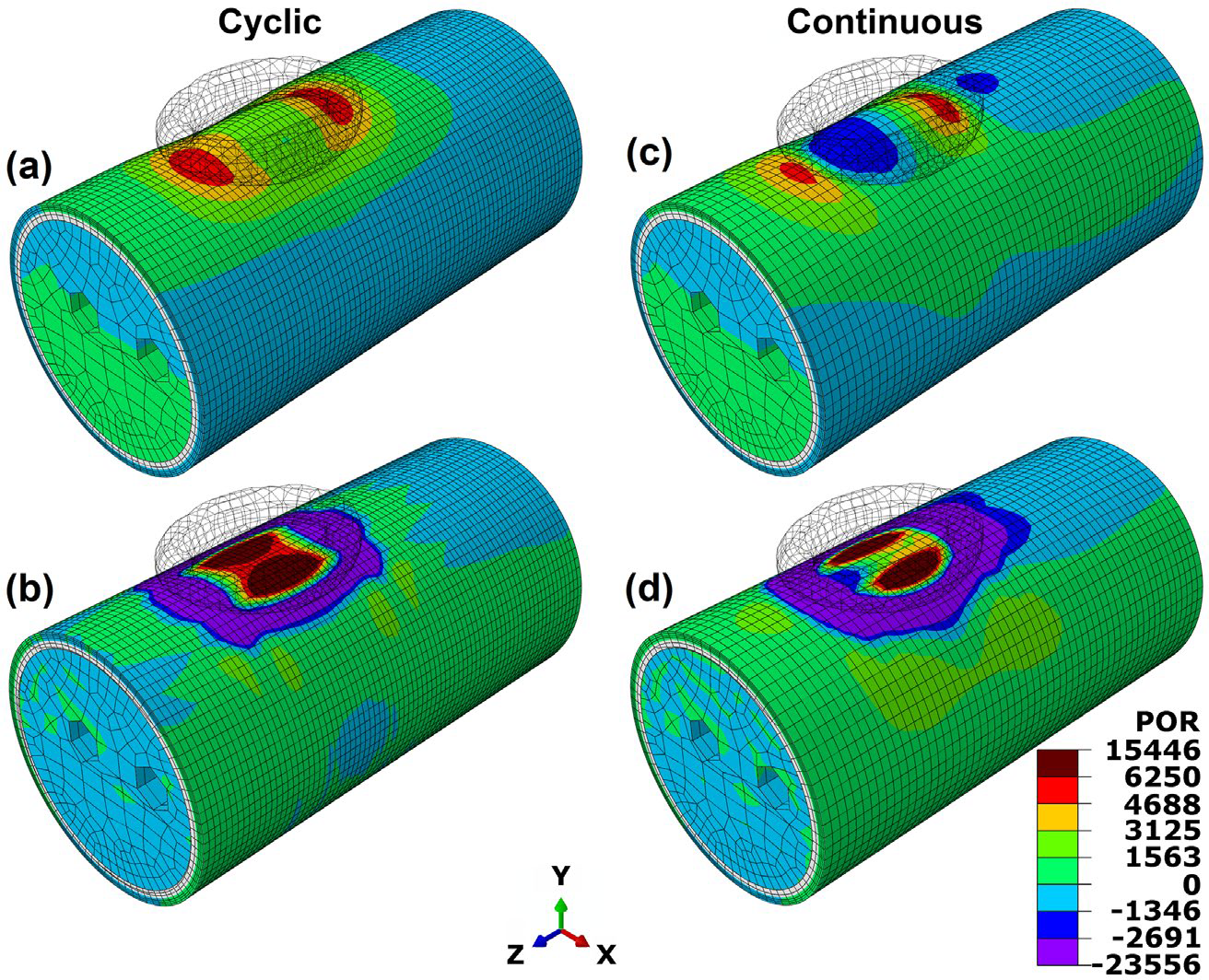
A finite element study by Iivarinen et al. (2016) compared how the cyclic and continuous suction modes of LymphaTouch move interstitial fluid in forearm soft tissue.
Modeling Of Interstitial Fluid Movement In Soft Tissue Under Negative Pressure–Relevance To Treatment Of Tissue Swelling
Iivarinen, J. T., Korhonen, R. K., & Jurvelin, J. S. 2016. Computer Methods In Biomechanics And Biomedical Engineering, 19(10), 1089-1098. https://doi.org/10.1080/10255842.2015.1101073
Purpose: This journal publication uses a computer-based finite element model of soft tissue to analyse how the pulsating and continuous modes of the LymphaTouch device affect fluid flow, velocity and pressure. The model response was matched with negative pressure (suction) measurements in the human forearm (N=11). Two experimental suction protocols were simulated to evaluate their impact on interstitial fluid flow in soft tissues. Simulated continuous suction was up to 27 times more efficient in fluid transportation than cyclic suction.
Methods: The finite element model was created using pQCT imaging and measurements of soft tissue response to negative pressure in eleven healthy volunteers (nine men, two women). The negative pressure and suction protocols were performed with the LymphaTouch device, and the recorded data was analysed using Matlab software. Two protocols were analysed, cyclic and continuous. The simulated cyclic procedure consisted of five 100 mmHg suctions and 1 cm lengthwise movement, with pulsation set at 2 s (one second of suction, one second of zero pressure). The continuous protocol consisted of one 100 mmHg suction with simultaneous 4 cm lengthwise movement of the suction head at a constant speed (4 cm in 4 s).
Results: The study found that continuous suction with a simultaneous change of treatment position induced higher fluid pressure and velocity transients, and moved fluid along the treatment direction more effectively than the cyclic method. The model does not take into account how negative pressure treatment of edema may affect pressure-dependent flow of interstitial fluid into the lymphatic system, or activation of the lymphatic system in transporting lymph fluid. Because the role of the lymphatic system is not included in the model, the finding that continuous mode moves fluid more effectively than cyclic mode applies best to areas where the lymphatic system does not work fully.
Watch the webinar recording
Fill in your details to get instant access to the recording.